
In recent years, artificial intelligence has undergone a dramatic transformation—from passive tools that respond to prompts into active agents capable of performing complex tasks autonomously. Among the most striking examples of this shift is OpenClaw, a rapidly growing open-source project on GitHub that has captured the imagination of developers, entrepreneurs, and everyday users alike. What began as a small experimental project has now evolved into a global phenomenon, often humorously described as “raising a lobster.”
The Origin of OpenClaw
OpenClaw originated in late 2025 as a weekend experiment by Austrian developer Peter Steinberger. Initially named Clawdbot, the project quickly gained attention on GitHub due to its unique concept: an AI assistant that does not merely answer questions but actively performs tasks on behalf of users.
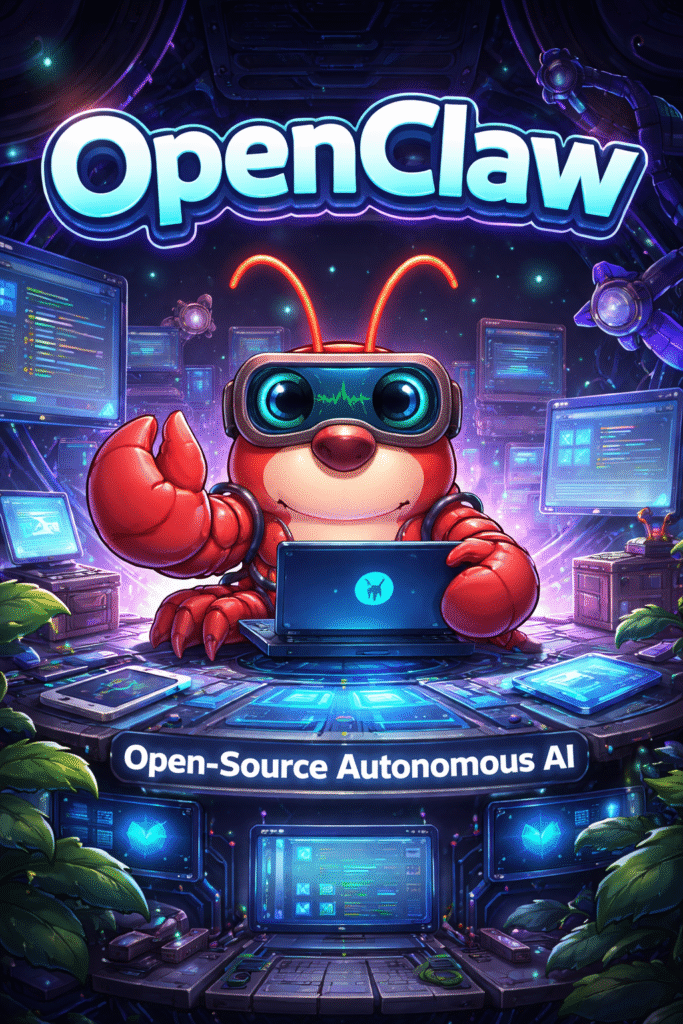
After a series of rebranding phases—from Clawdbot to Moltbot and finally to OpenClaw—the project stabilized under its current name in early 2026. The name reflects both its open-source nature and its symbolic mascot: a lobster.
The lobster theme is not accidental. According to the project’s documentation, lobsters represent adaptability and growth—qualities that mirror the evolving nature of AI systems. Over time, this mascot became central to the community identity, giving rise to the now-famous phrase: “raising a lobster.”
What Is OpenClaw?
At its core, OpenClaw is a self-hosted, open-source AI agent that can execute real-world tasks using natural language instructions. Unlike traditional chatbots, which simply generate text, OpenClaw can:
- Browse websites and extract information
- Send messages and manage communication tools
- Execute system commands and scripts
- Interact with files and local environments
- Automate workflows across applications
This capability makes OpenClaw fundamentally different from earlier AI tools. It is not just an assistant—it is an operator, capable of acting within a digital environment.
Another defining feature is its local-first design. Users can run OpenClaw on their own machines, ensuring that their data remains private. Combined with its extensibility through plugins and community-developed “skills,” OpenClaw offers a flexible platform for building personalized AI systems.
GitHub Explosion and Open-Source Momentum
One of the most remarkable aspects of OpenClaw is its explosive growth on GitHub. Within a short period, the project accumulated hundreds of thousands of stars and tens of thousands of forks, making it one of the fastest-growing repositories in recent history.
This rapid rise reflects several broader trends:
- The popularity of open-source AI tools
- The growing interest in autonomous agents
- The accessibility of modern AI APIs
Because OpenClaw is open source, developers can inspect, modify, and extend its code. This transparency has attracted a global community of contributors who continuously improve the system and build new features.
In many ways, OpenClaw represents a new paradigm: AI as infrastructure, rather than just an application.
The “Raising a Lobster” Phenomenon
Perhaps the most fascinating aspect of OpenClaw is its cultural impact. The phrase “raising a lobster” has become a popular metaphor among users, especially in China and online developer communities.
Why “raising”?
Because using OpenClaw often feels less like using software and more like training a digital organism. Users must:
- Configure the environment
- Teach the agent how to perform tasks
- Monitor its behavior
- Continuously refine its capabilities
This process resembles raising a pet—or even nurturing a living system. As one Reddit user described, OpenClaw can “handle real tasks like sorting emails and managing calendars,” effectively acting as a digital assistant that evolves over time.
Another user demonstrated how an OpenClaw agent could autonomously generate startup ideas, build landing pages, and evaluate market interest with minimal human intervention.
These examples highlight a key shift: users are no longer just interacting with AI—they are collaborating with it.
Why OpenClaw Became So Popular
Several factors explain the viral success of OpenClaw:
1. Autonomy
Unlike traditional AI systems, OpenClaw can take initiative. It does not wait for instructions—it can monitor conditions, send alerts, and execute workflows proactively.
2. Flexibility
OpenClaw integrates with a wide range of tools and platforms, from messaging apps to development environments. This makes it highly adaptable to different use cases.
3. Accessibility
Despite its advanced capabilities, OpenClaw can be set up with relatively simple commands, making it accessible to non-experts.
4. Community-Driven Innovation
The open-source model allows anyone to contribute, leading to rapid innovation and experimentation.
5. Cultural Appeal
The lobster mascot and “raising” metaphor add a playful, engaging dimension that makes the technology more approachable.
Applications of OpenClaw
OpenClaw’s capabilities enable a wide range of applications:
- Personal productivity: managing emails, calendars, and tasks
- Software development: automating coding workflows
- Business automation: handling customer interactions and operations
- Research and data analysis: gathering and processing information
- Entrepreneurship: testing ideas and launching products
In some cases, OpenClaw agents function as “digital employees,” capable of performing tasks that would traditionally require human labor.
Challenges and Controversies
Despite its promise, OpenClaw is not without risks. Its powerful capabilities also introduce significant challenges.
1. Security Risks
Because OpenClaw can access files, execute commands, and interact with external systems, it creates a large attack surface. Researchers have identified vulnerabilities such as prompt injection and unauthorized code execution.
2. Misuse and Malware
Some community-developed extensions have been found to contain malicious code, highlighting the risks of open ecosystems.
3. Privacy Concerns
Although OpenClaw can run locally, improper configuration may expose sensitive data.
4. Complexity
While basic setup is simple, advanced usage can be technically demanding, requiring knowledge of APIs, scripting, and system administration.
5. Ethical Questions
As AI agents become more autonomous, questions arise about accountability, control, and trust.
Global Impact
OpenClaw’s influence extends beyond the developer community. In some regions, particularly China, it has sparked a broader technological and cultural movement. Companies and governments are exploring ways to integrate such agents into workflows, while also addressing associated risks.
This reflects a larger shift toward an “agent-based economy,” where AI systems play an active role in production and decision-making.
The Future of OpenClaw
Looking ahead, OpenClaw may represent just the beginning of a new era in AI. Future developments could include:
- Improved safety and security mechanisms
- More advanced autonomous capabilities
- Deeper integration with real-world systems
- Collaborative networks of AI agents
Some researchers are already exploring frameworks that allow OpenClaw-like agents to learn continuously from interactions, further enhancing their capabilities.
Conclusion
OpenClaw is more than just a GitHub project—it is a symbol of the next generation of artificial intelligence. By combining autonomy, flexibility, and open-source collaboration, it has redefined what AI systems can do.
The “raising a lobster” phenomenon captures this transformation in a uniquely vivid way. It reflects a shift from using tools to cultivating intelligent systems, from issuing commands to building partnerships with AI.
As the technology continues to evolve, OpenClaw raises both exciting possibilities and important questions. It challenges us to rethink not only how we use AI, but also how we coexist with it.
In the end, raising a lobster may not just be a trend—it may be a glimpse into the future of human-AI interaction.