
The clash between India and England in the 2026 ICC Men’s T20 World Cup semi-final will be remembered as one of the most thrilling matches in the history of T20 cricket. Played in front of a packed stadium and watched by millions worldwide, the match encapsulated everything that makes cricket such a captivating sport: explosive batting, strategic brilliance, relentless pressure, and a dramatic finish that kept fans on the edge of their seats until the final ball.
This encounter was not merely a semi-final; it was a battle between two cricketing giants, each with a rich history, passionate fan bases, and a modern approach to the shortest format of the game. India, known for its depth in batting and disciplined bowling attack, faced England, a team that has redefined aggressive cricket over the past decade. The result was a high-scoring spectacle that showcased the evolution of T20 cricket and highlighted the growing competitiveness of international tournaments.
Historical Context and Rivalry
India and England have shared a long and competitive cricketing rivalry that dates back decades. From Test matches in the early 20th century to modern limited-overs encounters, the two teams have consistently produced memorable contests. In recent years, their rivalry has intensified, particularly in the T20 format, where both teams have embraced aggressive strategies and innovative tactics.
England’s transformation into a white-ball powerhouse began after their disappointing exit from the 2015 Cricket World Cup. Since then, they have adopted a fearless, attacking style of play that prioritizes high scoring and adaptability. India, on the other hand, has combined its traditional strengths—technical proficiency and composure—with modern aggression, creating a balanced and formidable team.
Heading into the 2026 semi-final, both teams were considered favorites to win the tournament. Their meeting at such a crucial stage ensured that the match would carry enormous significance.
Match Setup and Conditions
The semi-final was held at the iconic Wankhede Stadium in Mumbai, a venue known for its batting-friendly pitch and lively atmosphere. The conditions favored high scoring, with a flat pitch, short boundaries, and minimal assistance for bowlers.
England won the toss and elected to field first, a decision influenced by the belief that chasing under lights would be advantageous. Dew often plays a role in evening matches, making it easier for the batting side in the second innings. However, this decision would later be scrutinized, as India’s batting lineup took full advantage of the conditions.
The stage was set for a high-scoring encounter, and both teams were aware that anything less than a near-perfect performance would not be enough to secure victory.
India’s Explosive Batting Performance
India’s innings began with intent and aggression. From the very first over, the batters looked to dominate the English bowlers, taking calculated risks and maintaining a high run rate.
The standout performer was Sanju Samson, whose innings of 89 runs off just 42 balls set the tone for India’s massive total. Samson’s batting was a perfect blend of power and precision. He played a variety of shots—lofted drives, pull shots, and innovative strokes—that kept the fielding side under constant pressure.
What made Samson’s innings particularly significant was its timing. He accelerated during the middle overs, a phase where teams often struggle to maintain momentum. His ability to find boundaries consistently ensured that India never lost control of the game.
Supporting him was Shivam Dube, who contributed a crucial 43 runs. Dube’s role was to maintain the momentum and provide stability, which he did effectively. His partnership with Samson added valuable runs and prevented England from making a comeback.
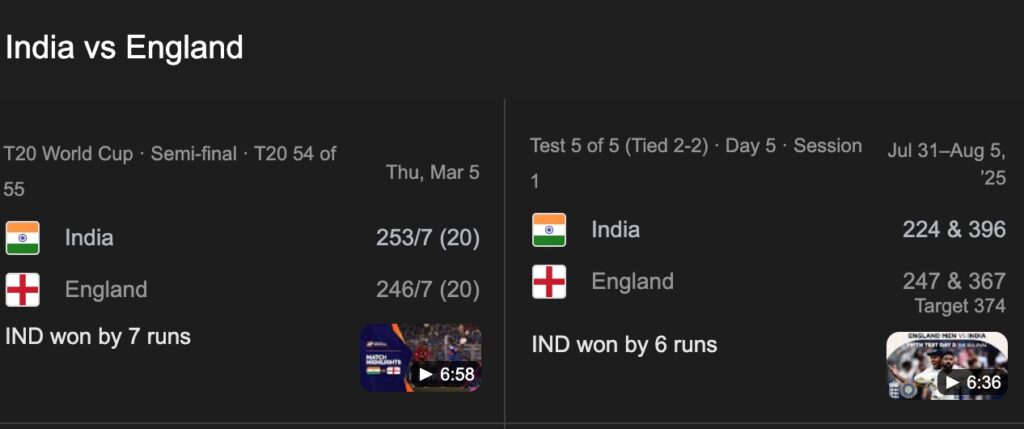
India’s batting lineup displayed remarkable depth. Even after losing wickets, the incoming players continued the aggressive approach, ensuring that the run rate never dipped significantly. By the end of the innings, India had posted a formidable total of 253/7 in 20 overs—a score that placed immense pressure on England.
England’s Bowling Struggles
England’s bowlers faced a difficult challenge on a pitch that offered little assistance. Despite their efforts, they struggled to contain India’s aggressive batting.
One of the key issues for England was their inability to execute plans consistently. Variations in pace and length were attempted, but India’s batters adapted quickly. Fielding errors, including a crucial dropped catch, further compounded England’s problems.
The pressure of a high-stakes match also seemed to affect the bowlers. In T20 cricket, even small mistakes can have significant consequences, and England’s inability to capitalize on key moments allowed India to build a commanding total.
England’s Remarkable Chase
Chasing a target of 254 runs in a T20 match is a daunting task, requiring both aggression and composure. England approached the chase with confidence, reflecting their modern philosophy of fearless cricket.
Jacob Bethell emerged as the hero for England, delivering a stunning century that kept his team in contention. His innings of 105 runs was a masterclass in T20 batting, combining powerful hitting with smart shot selection.
Bethell’s performance was supported by contributions from other batters, who ensured that the required run rate remained within reach. England’s strategy was clear: attack from the outset and avoid falling behind.
As the innings progressed, the match turned into a high-scoring thriller. Boundaries flowed from both ends, and the crowd was treated to an exhilarating display of batting.
At one stage, England appeared to be in a strong position, with the required runs decreasing rapidly. However, the pressure of the chase began to mount as wickets fell at crucial moments.
Turning Points of the Match
Several key moments defined the outcome of the match:
- Samson’s Dominance
His explosive innings provided India with a strong foundation and a challenging total. - Dropped Catch
England’s missed opportunity early in Samson’s innings proved costly, as he went on to score heavily. - Bethell’s Century
His remarkable performance kept England in the game and nearly turned the match in their favor. - Death Bowling by India
India’s bowlers executed their plans effectively in the final overs, restricting England’s scoring. - Final Over Drama
The match came down to the last over, with England needing a significant number of runs. Despite a valiant effort, they fell short.
India’s Bowling Under Pressure
India’s bowlers played a crucial role in securing victory. Jasprit Bumrah and Hardik Pandya were particularly effective in the death overs, using variations in pace and accurate yorkers to limit England’s scoring.
Bowling in the final overs of a high-scoring match requires not only skill but also mental strength. India’s bowlers demonstrated composure and discipline, ensuring that England could not complete the chase.
Their ability to perform under pressure was a key factor in India’s victory.
The Final Result and Its Significance
England finished their innings at 246/7, falling just seven runs short of the target. India’s narrow victory highlighted the fine margins that often determine the outcome of T20 matches.
This win secured India’s place in the final and reinforced their status as one of the strongest teams in the tournament. It also demonstrated their ability to handle pressure and deliver in crucial moments.
For England, the loss was disappointing but not without positives. Their performance showcased their resilience and attacking capabilities, proving that they remain a formidable force in international cricket.
Broader Impact on T20 Cricket
This match reflects the broader evolution of T20 cricket. High scores, aggressive strategies, and close finishes have become defining characteristics of the format.
The India vs England semi-final serves as an example of how the game has changed. Teams are no longer content with modest totals; instead, they aim for scores that were once considered unattainable.
The match also highlights the importance of adaptability. Both teams adjusted their strategies based on conditions and match situations, demonstrating the tactical depth of modern cricket.
Conclusion
The India vs England semi-final in the 2026 T20 World Cup will be remembered as a modern classic. It combined individual brilliance, team effort, and high-pressure drama to create an unforgettable spectacle.
India’s victory was a testament to their skill, strategy, and composure, while England’s performance showcased their determination and fighting spirit. The match not only entertained fans but also demonstrated the evolving nature of T20 cricket.
As the sport continues to grow, encounters like this will play a crucial role in shaping its future. They remind us why cricket remains one of the most exciting and unpredictable sports in the world.
In the end, this match was more than just a game—it was a celebration of cricket at its finest.