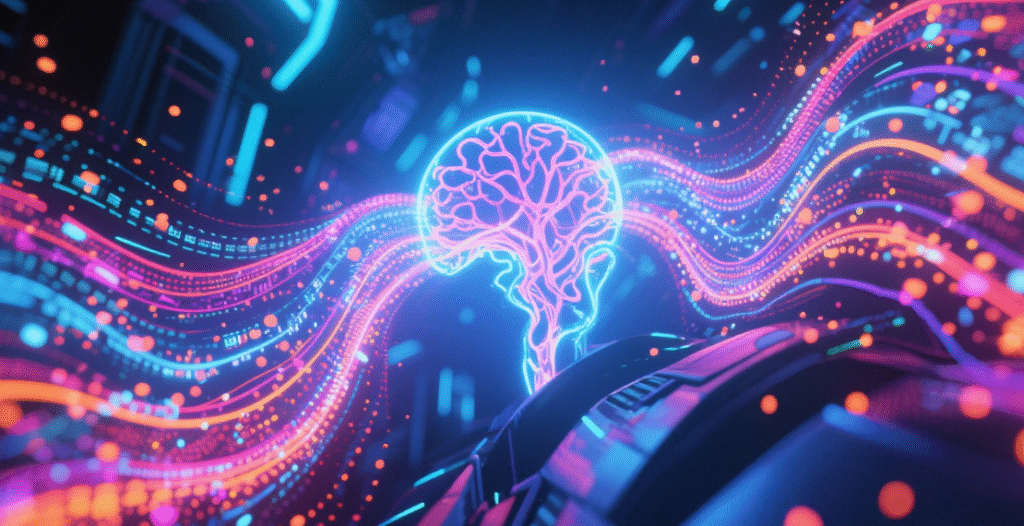

In the mid-2020s, the artificial intelligence industry faced a “Power Wall.” As Large Language Models (LLMs) grew in complexity, their thirst for electricity threatened global climate goals and strained national grids. However, a breakthrough from Tufts University and global research partners has shifted the paradigm. By integrating the logical precision of symbolic reasoning with the pattern recognition of neural networks, Neuro-symbolic AI has emerged as the most significant leap in energy-efficient computing this decade.
The AI Energy Crisis of 2026
By early 2026, AI data centers accounted for over 10% of total U.S. electricity consumption. The “Brute Force” era—defined by scaling parameters and massive GPU clusters—reached a point of diminishing returns. The environmental cost of training a single frontier model was equivalent to the lifetime emissions of hundreds of passenger vehicles.
Traditional Deep Learning models are essentially “black boxes” that require trillions of floating-point operations to perform even simple tasks. This is where Neuro-symbolic AI changes the game.
What is Neuro-symbolic AI?
Neuro-symbolic AI is a hybrid approach that combines two historically opposing fields of computer science:
- Neural Networks (The “Intuition”): Excellent at processing unstructured data like images, audio, and natural language.
- Symbolic AI (The “Logic”): Uses rules and symbols (if-then statements) to represent knowledge and perform transparent reasoning.
By combining these, researchers have created systems that “think” more like humans. We don’t need to see a million pictures of a cat to know what one is; we understand the concept of a cat. Neuro-symbolic systems apply this conceptual logic to reduce the need for massive data processing.
The 100x Breakthrough: Why It Matters
The recent report highlighting a 100x improvement in energy efficiency isn’t just a marginal gain; it’s a total transformation. Here is how this efficiency is achieved:
1. Reduced Computational Overhead
Traditional neural networks must re-calculate probabilities for every token. Symbolic layers allow the model to “short-circuit” unnecessary computations by following established logical rules. When the answer is a matter of logic rather than probability, the system stops using the energy-intensive neural clusters.
2. Small Data Learning
Neuro-symbolic AI can achieve high accuracy with significantly smaller datasets. Because the model understands underlying rules, it doesn’t need to see every possible permutation of a scenario. Less data means less training time, and less training time means a smaller carbon footprint.
3. Transparency and “Explainability”
One of the greatest “hidden costs” of AI is debugging. When a deep learning model fails, it takes massive resources to find out why. Neuro-symbolic AI is inherently “explainable.” The symbolic layer provides a literal map of the decision-making process, allowing engineers to fix errors without retraining the entire model.
Real-World Applications in 2026
The 100x energy efficiency isn’t just a laboratory metric; it is already being deployed in critical sectors:
Sustainable Smart Cities
In cities like Singapore and Zurich, Neuro-symbolic AI manages power grids. By using logic-based constraints to predict energy surges, these systems optimize distribution with a fraction of the power required by previous-gen AI.
Edge Computing and Robotics
Because these models require less power, they can run locally on “Edge” devices. We are seeing a new generation of autonomous drones and medical devices that perform complex reasoning on a single battery charge, rather than needing a constant uplink to a massive data center.
Space Exploration: Artemis II
NASA’s Artemis II mission utilizes Neuro-symbolic vision systems. In the harsh environment of lunar orbit, where power is a precious commodity, these AI systems can identify craters and landing hazards using low-power onboard processors, ensuring astronaut safety without draining the lunar lander’s life-support energy.